adamski93

  • What Does a Good Life Actually Mean to Me?

    What Does a Good Life Actually Mean to Me?

    Money, time, health, relationships and building a life on my own terms.

    For a long time, I think most of us grow up with a fairly similar idea of what a successful life should look like.

    Study. Find a job. Build a career. Buy a house. Work hard. Save money. Eventually retire.

    There is nothing necessarily wrong with that path. For many people, it provides stability, security and a life they genuinely enjoy.

    But at some point, I started asking myself a different question.

    What if there is more than one way to live a good life?

    What if success isn’t only about how much money you earn, what position you have at work or how many things you own?

    What if it’s also about having control over your time, being healthy, experiencing the world and spending your days doing things that actually matter to you?

    That’s a question I’ve been thinking about for years.

    And the more I experience life, the more I realise that a good life means something different to everyone.

    Here’s what it means to me.

    1. Freedom to make your own choices

    For me, freedom is one of the most important parts of a good life.

    It’s not necessarily about being rich, never working or travelling around the world without responsibilities.

    It’s about having choices.

    The ability to decide where you live, what you do with your time, what kind of work you pursue and what direction you want your life to take.

    I don’t think complete independence is realistic for everyone, and we all have responsibilities.

    But I believe we can gradually create more freedom through the decisions we make.

    Developing useful skills, managing money wisely, building savings and being willing to explore different opportunities can give us more options.

    And having options matters.

    2. Money should give you options, not control your life

    Money is an important part of life.

    It provides security, allows us to access opportunities and makes many experiences possible.

    But I don’t believe money should become the only purpose of living.

    You can spend years chasing a higher salary, a bigger house or more expensive possessions and still feel that something is missing.

    For me, the more interesting question is not simply how much money I can earn.

    It’s what money can help me achieve.

    Can it give me more flexibility? Can it reduce financial stress? Can it allow me to travel, spend more time with people I care about or make decisions without constantly worrying about the next paycheck?

    I also became interested in Bitcoin because it introduced me to different ways of thinking about money, ownership and financial independence.

    But financial freedom isn’t something that happens overnight.

    It takes time, knowledge, discipline and responsible decisions.

    3. Your health is part of your freedom

    Imagine having financial resources and plenty of free time but not having the health or energy to enjoy them.

    That’s why I believe health should be one of our biggest priorities.

    Being physically active, eating properly, sleeping well and looking after your mental well-being can have a huge impact on everyday life.

    For me, training is not only about physical appearance.

    It’s about remaining capable of doing the things I enjoy.

    I want to travel, explore, be active and experience life for as long as possible.

    Health gives you more opportunities to do those things.

    And just like financial security, it requires long-term attention.

    4. Experiences make life richer

    Living abroad and travelling to more than 20 countries has changed my perspective.

    I’ve met people from different backgrounds, experienced different cultures and seen lifestyles very different from the one I grew up with.

    These experiences have taught me that there isn’t one universal formula for happiness.

    Some people love living in big cities. Others prefer small towns, mountains or the sea.

    Some want a demanding career. Others prioritise family, creativity or a simpler lifestyle.

    Travelling has made me more curious about the world and more open to different possibilities.

    I don’t think you need to visit 50 countries or spend thousands of euros to live an interesting life.

    Sometimes a meaningful experience can be as simple as meeting someone new, exploring a nearby place or trying something you’ve never done before.

    It’s not always about how far you go.

    It’s about how much you experience along the way.

    5. Relationships matter more than possessions

    It’s easy to spend a lot of time thinking about material goals.

    A better car. A bigger house. New technology. More expensive holidays.

    But when I think about what makes life meaningful, relationships are a huge part of the answer.

    The people you spend time with, the conversations you have, the memories you create and the support you give each other.

    Money can buy many things, but it cannot automatically create meaningful relationships.

    I would rather build a life that leaves room for the people who matter than become so focused on work and material goals that I forget to enjoy the present.

    6. Don’t be afraid to change direction

    One thing I’ve learned from living abroad is that life rarely follows a perfectly straight line.

    You make decisions. You learn from them. Sometimes things work out, and sometimes they don’t.

    And that’s okay.

    You might discover that a career isn’t right for you anymore. You might want to move to another country, learn a new skill, start a business or completely rethink your priorities.

    Changing direction doesn’t automatically mean you’ve failed.

    Sometimes it means you’ve learned more about yourself.

    I think we put too much pressure on having everything figured out.

    You don’t need to have the perfect plan for the next 30 years.

    You just need to be willing to think, learn and take the next step.

    7. Build a life that feels right to you

    Perhaps the biggest lesson is that you shouldn’t measure your life entirely against someone else’s expectations.

    Social media makes it easy to compare yourself with people who appear to have everything figured out.

    You see the successful business, the beautiful house, the expensive holidays and the perfect lifestyle.

    But you rarely see the full picture.

    Everyone has different circumstances, responsibilities, opportunities and priorities.

    Your version of a good life doesn’t need to look like somebody else’s.

    Maybe you want to build a business. Maybe you want to travel. Maybe you want a family, a peaceful home, financial security or more time for yourself.

    There is no single correct answer.

    The important thing is understanding what matters to you and making decisions that move you closer to it.

    So, what does a good life actually mean to me?

    For me, it’s a combination of several things.

    · 

    Having enough financial security to make choices.

    · 

    · 

    Having the freedom to decide how I spend my time.

    · 

    · 

    Looking after my physical and mental health.

    · 

    · 

    Exploring the world and experiencing different cultures.

    · 

    · 

    Building meaningful relationships.

    · 

    · 

    Learning new things and continuing to grow.

    · 

    · 

    Having the courage to change direction when necessary.

    · 

    I don’t have everything figured out.

    I’m still learning, experimenting and trying to understand what kind of life I want to build.

    And perhaps that’s the point.

    A good life isn’t a destination you reach one day.

    It’s something you create through the decisions you make, the experiences you have and the people you share it with.

    You don’t need to change everything tomorrow.

    You don’t need to have the perfect plan.

    Start with one thing that matters to you.

    Because your life is yours.

    Build a life on your own terms.

    — B FOR MYSELF
  • Why I Started Taking My Health Seriously

    Why I Started Taking My Health Seriously

    From playing football as a child to training for the person I want to be at 60.

    Sport has been part of my life for as long as I can remember.

    I started playing football when I was six years old and continued for around 13 years. Over time, I also experienced other activities, including swimming, volleyball, skiing and golf.

    Being active was simply part of my everyday life.

    But as I got older, my understanding of health started to change.

    I began to realise that being healthy isn’t just about playing sports, looking fit or lifting heavy weights. It’s about building a body and lifestyle that will support you not only today, but also in the future.

    That’s why I started paying more attention to how I train, what I eat and how I take care of myself.

    1. Health is more than appearance

    When people talk about fitness, the conversation often focuses on appearance.

    Building muscle, losing weight, getting stronger or achieving a certain body shape.

    There’s nothing wrong with having those goals. They can be great motivation.

    But I think health is much bigger than that.

    It’s about having the energy to enjoy your everyday life. It’s about being physically capable, feeling good in your body and maintaining the ability to do the things you enjoy.

    I don’t want to train just to look a certain way.

    I want to remain strong, mobile and active as I get older.

    I want to be able to travel, explore new places, participate in activities and enjoy life without unnecessary physical limitations.

    2. Consistency matters more than motivation

    One of the biggest lessons I’ve learned through sport is that motivation comes and goes.

    Some days you feel energetic and excited to train. Other days, you would rather stay at home.

    If you rely entirely on motivation, it becomes difficult to stay consistent.

    That’s why I believe building a routine is so important.

    You don’t need every workout to be perfect. You don’t need to break records every week. You simply need to keep showing up.

    Some training sessions will be better than others. Progress can be slow, and sometimes you might feel like you’re not moving forward at all.

    But over months and years, consistency makes a difference.

    Small actions repeated regularly can become something much bigger.

    3. Strength training is an investment in the future

    Strength training has become an important part of my lifestyle.

    It’s not only about building muscle. Resistance training can support physical function, strength and independence as we age.

    Think about the things you want to be able to do when you’re 40, 50, 60 or even older.

    Carry your luggage without struggling. Walk long distances. Climb mountains. Play with your children or grandchildren. Enjoy holidays without worrying about whether your body can handle the activities.

    These things might seem ordinary today, but maintaining that physical ability takes effort.

    I see training as an investment in my future self.

    The goal isn’t to become the strongest person in the gym.

    It’s to build a body that allows me to live the life I want.

    4. Nutrition matters just as much as training

    You can spend hours in the gym, but your lifestyle outside the gym also matters.

    Food provides the energy and nutrients your body needs to function, recover and adapt to exercise.

    Over time, I’ve become more aware of the importance of eating properly and getting enough protein.

    I don’t believe healthy eating needs to be complicated.

    You don’t need to follow every new diet trend or completely change your life overnight.

    For me, the basics are more important:

    · 

    Eat a variety of nutritious foods.

    · 

    · 

    Get enough protein.

    · 

    · 

    Include fruit and vegetables.

    · 

    · 

    Drink enough water.

    · 

    · 

    Avoid making highly processed food the foundation of your diet.

    · 

    · 

    Find an approach you can maintain over the long term.

    · 

    The best diet is not necessarily the most restrictive one.

    It’s the one that supports your health and fits into your everyday life.

    5. Recovery is part of progress

    When you’re motivated to train, it’s easy to think that more is always better.

    More workouts, more weight, more repetitions.

    But your body also needs time to recover.

    Sleep, rest and managing stress are important parts of a healthy lifestyle.

    Training creates a stimulus. Recovery allows your body to adapt.

    Ignoring recovery can eventually work against your progress.

    I’ve learned that looking after your body doesn’t mean constantly pushing it to its limits.

    Sometimes it means knowing when to slow down.

    6. Think about your health in the long term

    One of the most important changes in my thinking was moving away from short-term goals.

    Instead of asking only what I want to achieve this month, I started thinking about the person I want to be in 20 or 30 years.

    What habits will help me stay healthy?

    What should I be doing now to support my future?

    How can I make physical activity a natural part of my life rather than something I do for a few months and then abandon?

    These questions changed how I look at fitness.

    Health isn’t a temporary project. It’s something you build throughout your life.

    7. Find an activity you genuinely enjoy

    Not everyone needs to spend hours lifting weights.

    Some people love running. Others enjoy cycling, swimming, football, hiking, dancing or martial arts.

    The important thing is finding something that makes you want to move.

    If you genuinely enjoy an activity, it’s much easier to make it part of your routine.

    You don’t need to copy someone else’s training programme or lifestyle.

    Find what works for you.

    And don’t be afraid to try something new.

    What I want my future self to thank me for

    I don’t expect to be in the same physical condition at 60 as I am today.

    That’s not realistic, and it’s not the point.

    What I want is to give my future self the best possible chance of remaining healthy, strong and independent.

    I want to keep exploring the world, travelling, discovering new places and enjoying experiences.

    And I understand that these things don’t happen automatically.

    They are influenced by the decisions we make every day.

    You don’t need to become a professional athlete or spend your entire life in the gym.

    Start with something manageable. Walk more. Find a sport you enjoy. Improve your eating habits. Get enough sleep.

    Then keep going.

    Because taking care of your health is one of the most valuable investments you can make.

    Build a life on your own terms.

    — B FOR MYSELF
  • What Living Abroad Taught Me About Life

    What Living Abroad Taught Me About Life

    How leaving home taught me independence, confidence, and a different way of seeing the world.

    At 20, I left the Czech Republic and moved abroad. I didn’t have a perfect plan for the future, and I certainly didn’t know exactly where life would take me.

    I just knew that I wanted to experience something different.

    Since then, I’ve lived in several countries, including England, the United States and the Netherlands. I’ve travelled to more than 20 countries, met people from different cultures and experienced ways of living that I probably wouldn’t have discovered if I had stayed in one place.

    Looking back, moving abroad taught me much more than I expected. It changed how I see the world, how I communicate with people and, most importantly, how I see myself.

    Here are some of the biggest lessons I’ve learned.

    1. Independence starts outside your comfort zone

    Moving abroad sounds exciting, and it is. But the reality isn’t always as glamorous as travel photographs make it look.

    You have to find accommodation, understand unfamiliar systems, deal with paperwork, organise your finances and build a life in a place where you might not know anyone.

    Even simple things can become complicated when you’re in a different country.

    But that’s exactly where independence begins.

    You learn to rely on yourself, make decisions and solve problems. You realise that you are capable of much more than you originally thought.

    And once you’ve experienced that, your confidence starts to grow.

    2. You learn to communicate with different people

    Living abroad puts you in contact with people who have different languages, traditions, beliefs and perspectives.

    You quickly realise that not everyone thinks the same way or approaches life in the same way.

    Sometimes you need to explain yourself differently. Sometimes you need to listen more carefully. And sometimes you simply need to accept that another person’s perspective can be just as valid as yours.

    Speaking different languages has also opened many doors for me. English became an important part of my everyday life, and learning to communicate with people from different backgrounds made me more confident.

    You don’t need to speak every language perfectly. Being open, respectful and willing to communicate can take you surprisingly far.

    3. Your idea of home can change

    When you leave your home country, you might initially think that home is simply the place where you were born.

    But after spending years abroad, your understanding of home can become more complicated.

    You meet people who make you feel welcome. You discover places where you enjoy living. You build routines and memories in countries that were once completely unfamiliar.

    For me, living abroad taught me that home isn’t necessarily just one geographical location.

    It can also be the people around you, the experiences you share and the feeling that you belong somewhere.

    And sometimes, travelling away from home helps you appreciate where you originally came from.

    4. You become more adaptable

    Life doesn’t always follow your plans.

    Moving between countries means adapting to different workplaces, cultures, living arrangements and expectations.

    You learn that things won’t always happen the way you’re used to.

    What works in one country might be completely different somewhere else. Even everyday habits can change.

    Instead of expecting everything to be familiar, you gradually become more comfortable with uncertainty.

    That ability to adapt is useful far beyond travelling. It helps with work, relationships, business and almost every unexpected situation life brings.

    5. Travelling changes how you see the world

    Travelling to more than 20 countries has shown me that there isn’t just one correct way to live.

    Some people prioritise careers. Others value family, free time, adventure or a simpler lifestyle.

    Some live in big cities, others in small villages or close to nature.

    You meet people who have very different circumstances but who are equally happy with their lives.

    It makes you question some of the assumptions you grew up with.

    You begin to understand that success, happiness and a good life can mean completely different things to different people.

    And I think that’s one of the most valuable things travelling can teach you.

    6. Experiences are worth more than perfect plans

    I used to think that having a clear plan was important before making a big decision.

    But moving abroad taught me that you don’t always need to know exactly what comes next.

    Sometimes the best opportunities come from unexpected situations, conversations or decisions that initially seem uncertain.

    Not every experience will be perfect. Not every move will work out exactly as you imagined.

    But even difficult experiences can teach you something.

    You become more experienced, more confident and more aware of what you actually want.

    What I would tell someone thinking about moving abroad

    If you’re considering moving to another country, my advice would be simple: don’t wait until everything is perfect.

    You don’t need to know every detail of your future.

    Of course, planning matters. You should understand your finances, accommodation, employment opportunities and practical responsibilities.

    But don’t let the fear of the unknown stop you from experiencing something that could change your life.

    You might discover a new country, a new career, new friendships or simply a different version of yourself.

    And if it doesn’t work out, you can always learn from the experience and choose another direction.

    What living abroad taught me most

    Leaving the Czech Republic at 20 was one of the decisions that shaped my life.

    It taught me independence, adaptability, communication and confidence. It introduced me to people and places I might otherwise never have known.

    But perhaps the biggest lesson was understanding that there isn’t just one path through life.

    You don’t have to follow the exact same route as everyone around you.

    You can explore, change direction, make mistakes and build something different.

    Because ultimately, your life is yours.

    Build a life on your own terms.

    — B FOR MYSELF
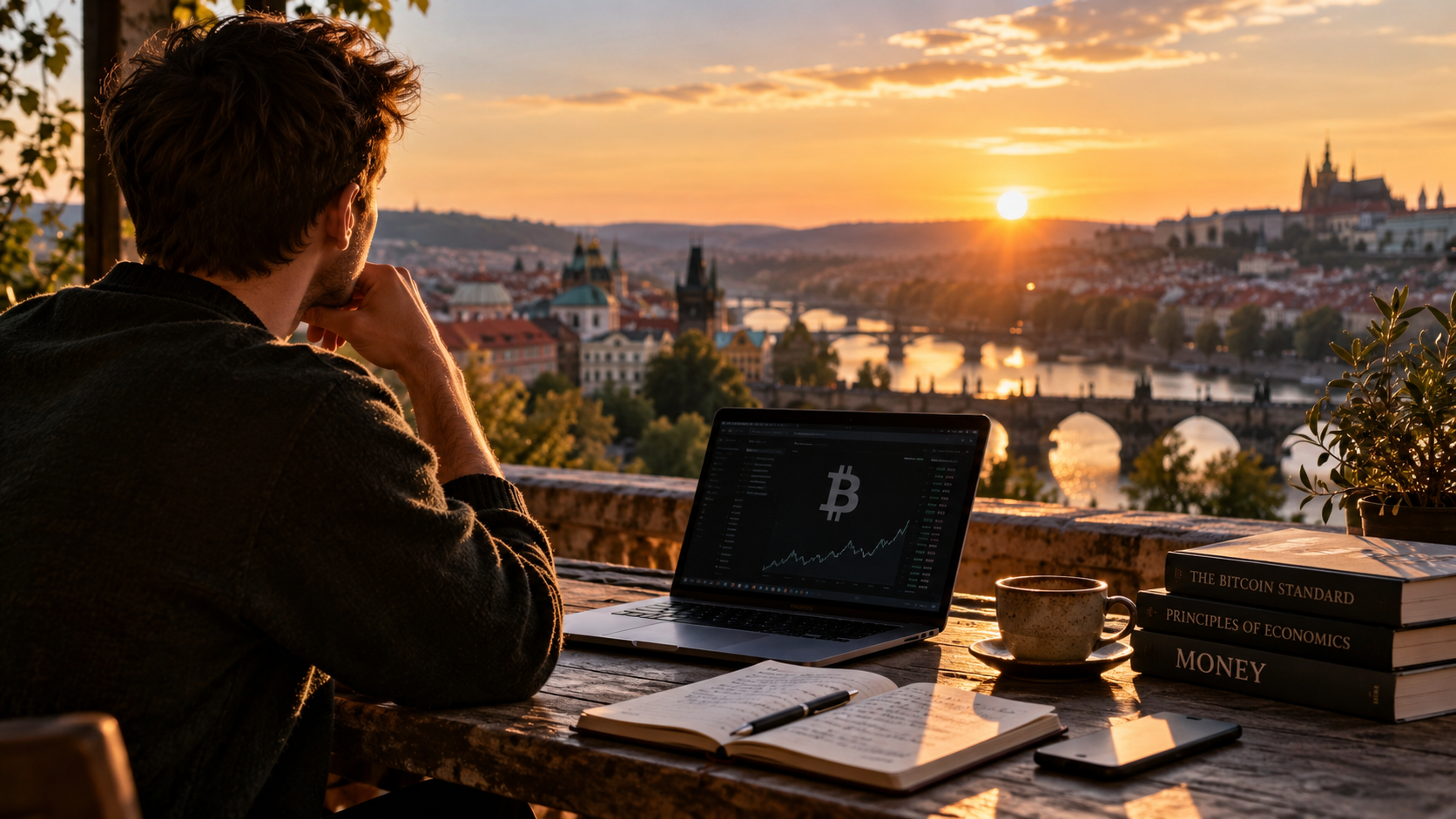
  • What I Wish I Knew About Bitcoin Five Years Ago

    What I Wish I Knew About Bitcoin Five Years Ago

    My journey from chasing crypto prices to understanding Bitcoin.

    When I first discovered Bitcoin around five years ago, I looked at it mainly as an opportunity to make money.

    Like many people, I was interested in the price. I wanted to understand where it was going, how much it could grow and whether it could become a good investment. I followed the market and thought about Bitcoin mostly in terms of numbers.

    But over time, something changed.

    The more I learned, the more I realised that Bitcoin was much more interesting than its price. It opened the door to questions I had never really thought about before: What is money? Who controls it? Why does its value change? And how much control do we actually have over our own finances?

    Looking back, there are several things I wish I had understood from the beginning.

    1. Bitcoin is more than an investment

    At first, I saw Bitcoin as another financial asset. Something you could buy, hold and hopefully sell for more money in the future.

    But Bitcoin is not simply another company share or financial product.

    It is a decentralised monetary network that operates without a central authority controlling it. Its rules are defined by its protocol, and its supply is limited to 21 million bitcoin.

    Understanding this changed the way I looked at it.

    Instead of focusing only on whether the price would go up or down, I became interested in why Bitcoin exists, what problem it tries to solve and why people around the world believe it matters.

    I started to see the bigger picture.

    2. Understanding money changes how you understand Bitcoin

    One of the most interesting things Bitcoin introduced me to was the subject of money itself.

    Most of us grow up using money without questioning how the system works. We receive our salary, keep savings in a bank account, pay our bills and assume that this is simply how money works.

    But money has a history, and the way modern financial systems operate is not something we should take for granted.

    Learning about inflation, monetary policy, central banks and the expansion of the money supply made me look at savings differently.

    It also helped me understand why Bitcoin’s fixed supply is so important to its supporters.

    You do not have to agree with every argument made by Bitcoin enthusiasts. But I believe understanding how money works is valuable in itself.

    Bitcoin gave me a reason to start asking those questions.

    3. Not your keys, not your coins

    This is probably one of the most important lessons I wish I had learned earlier.

    Buying Bitcoin is one thing. Understanding how to own and control it is another.

    When you leave your Bitcoin on an exchange, you are relying on that company to hold it and give you access to it when you want to withdraw it.

    Self-custody means taking responsibility for your own Bitcoin by controlling the private keys that allow you to access and spend it.

    This comes with responsibility. You need to understand how wallets work, protect your recovery phrase and make sure nobody else can access your funds.

    There is no customer service department that can simply reset your Bitcoin password if you lose your recovery phrase.

    That responsibility might sound intimidating at first, but it is also part of what makes Bitcoin different.

    For me, the idea that you can hold your own money without depending on a bank or another institution is one of the most interesting aspects of the technology.

    4. Privacy and financial independence matter

    Another thing I did not fully appreciate when I first discovered Bitcoin was the connection between money, privacy and personal independence.

    We live in a world where so much of our financial activity takes place through institutions and services that we do not control.

    Bitcoin offers another way to transfer and hold value. It can operate across borders, without requiring permission from a traditional financial intermediary.

    However, Bitcoin is not completely anonymous. Transactions are recorded on a public blockchain, and privacy requires care and understanding.

    That distinction is important.

    For me, learning about Bitcoin was not just about investing. It was also about understanding how much control I have over my own money and what alternatives exist.

    5. You do not need to become a trader

    One of the biggest mistakes beginners can make is believing that they need to constantly watch the market.

    Bitcoin’s price can move dramatically. It is easy to become caught up in daily movements, predictions and opinions from people online.

    I know how tempting it can be to focus on short-term opportunities.

    But over time, I became more interested in understanding Bitcoin itself than trying to predict every price movement.

    You do not need to trade every week or check the price every hour to learn about Bitcoin.

    Take your time. Read, question things, understand the risks and never invest money you cannot afford to lose.

    There is no need to rush.

    6. Learn before you invest more

    If I could give one piece of advice to someone discovering Bitcoin today, it would be this: learn before you invest more.

    Understand what you are buying. Learn how wallets work. Understand the difference between an exchange and self-custody. Read about the technology, the monetary system and the risks.

    Do not rely on social media personalities or promises of quick profits.

    Bitcoin is not guaranteed to make you wealthy. Its price can fall significantly, and there are real risks involved in holding it.

    The more you understand, the better prepared you will be to make your own decisions.

    And that is much more valuable than following somebody else’s predictions.

    What Bitcoin Means to Me Today

    Five years ago, I discovered Bitcoin because I was interested in making money.

    Today, I see it as something much bigger than an investment.

    It introduced me to new ideas about money, ownership, privacy and independence. It encouraged me to question things I had previously accepted without much thought.

    I am still learning. I do not consider myself an expert, and I do not believe anyone should blindly follow what I say.

    That is not what B FOR MYSELF is about.

    It is about learning, exploring different ideas, sharing real experiences and making our own decisions.

    Bitcoin may or may not be right for everyone. But I believe it is worth understanding, even if you never decide to own any.

    Because sometimes the most valuable thing an investment can give you is not money.

    It is a completely different way of looking at the world.

    Build a life on your own terms.

    — B FOR MYSELF
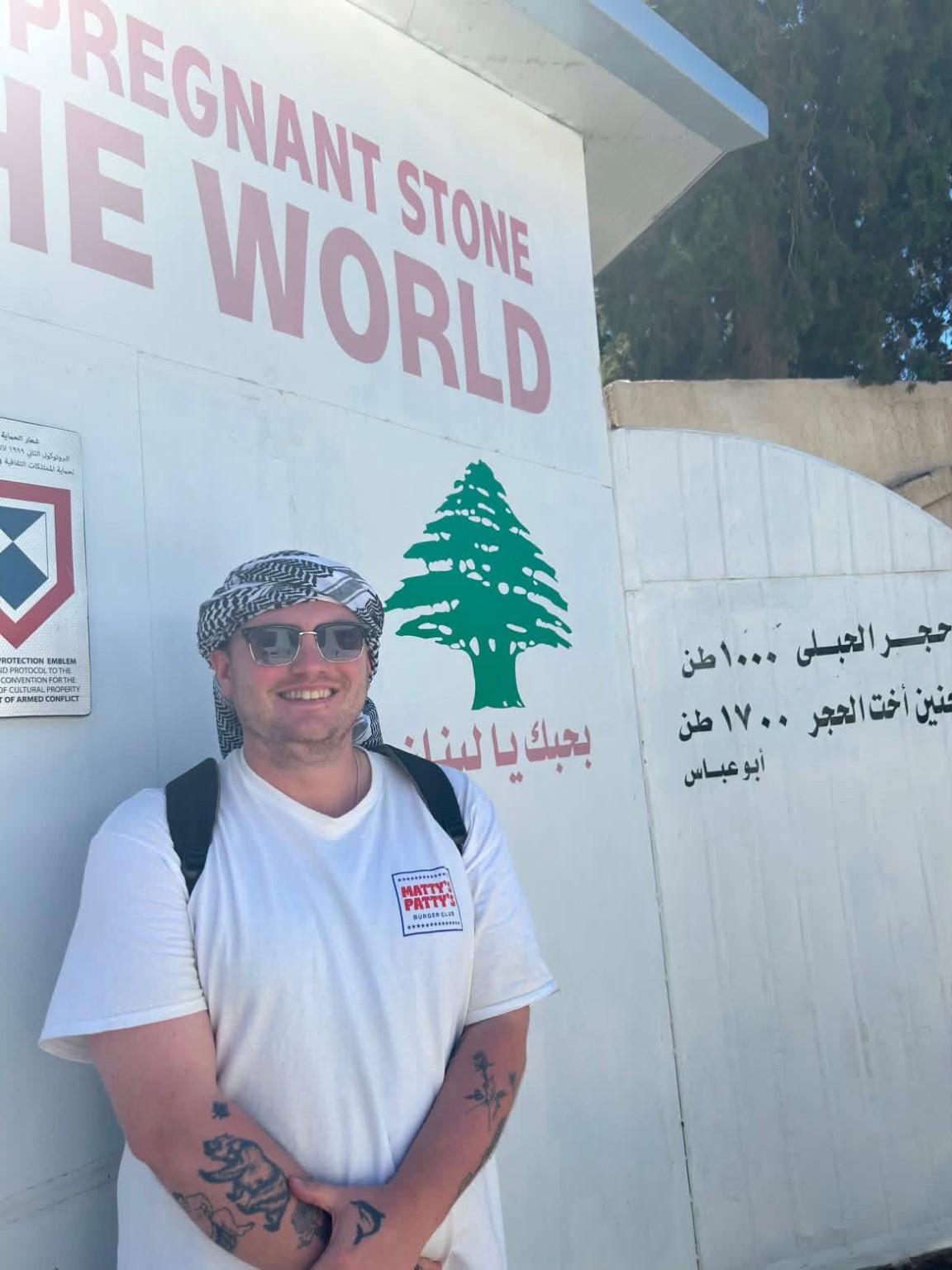
  • Interview #1: Calvin Bryson — Traveller

    Interview #1: Calvin Bryson — Traveller

    Getting to know you

    Could you introduce yourself? What’s your name, where are you from, and where do you live now?

    Hello! My name is Calvin Bryson, I was born in Irvine Scotland but I’ve grown up in a little town in the North West of England called Clitheroe.

    What do you do for a living, and how does your work fit into your travelling lifestyle?

    I’m currently a bartender in a little country pub in Lancashire. I’ve also worked as a lifeguard which helped me get jobs at summer camps in the USA and Canada. I’ve also worked as a joiner and ski lift operator in Banff.

    What first made you want to travel and see more of the world?

    I didn’t start properly travelling until January 2024 where I did my first solo trip around Europe heading to many famous European cities like Cologne, Munich, Vienna, Istanbul and Athens. I wanted to start travelling because I wanted to try something different that would help me get out off my comfort zone and what I’m familiar with.

    Your life as a traveller

    How many countries have you visited so far, and which one has been your favourite? What made it special?

    At the moment I’ve been to 45 countries but I’m going to do a trip around the Balkans including Switzerland, Liechtenstein and Luxembourg which would take me to 57 countries and nearly every country in Europe. Countries like Canada and Japan are special for me because I’ve met some incredible people there and now I’ll always have a reason to go back. Turkey, Lebanon and Vietnam are just so different from my home life that it almost becomes an addiction to come back and explore more off the country and meet more people.

    What do you usually look for when you travel? What does travelling give you that you don’t get from staying in one place?

    I enjoy going to places with a lot of history and a good food scene so for me cities like Prague, Florence, Istanbul and Beirut are perfect because I can go to an ancient ruins that’s 2/3 thousand years old and then get a delicious meal that I wouldn’t be able to get back home. Traveling allows me to breath, relax and get my thoughts and feelings straight, I usually travel by myself so being able to turn my mind off for a few days and focus on myself helps me stay sane!

    What’s your favourite way to explore a new place? For example, road trips, backpacking, public transport, hiking, staying with locals, or simply exploring without a strict plan.

    I’ll usually have a list of things I want to do mainly historical sights and local restaurants and I’ll always try to walk everywhere, my rule is that if the place I’m going to is less than a two hour walk then I’m walking it! That way its a good way to save cash on transport and you get to see more off the place your visiting…also its good exercise!

    Do you prefer big cities or nature and more remote places? Why?

    I love going to big cities by myself because there’s always so much to do that you won’t feel as though your by yourself for too long. But I love going out into nature with friends, camping, hiking and just having a good time with friends in the outdoors is just an incredible experience that can’t be beat.

    Have you ever visited somewhere and thought, “I could actually live here”? If so, where and why?

    I love living in England and especially near the countryside but Edinburgh and London have always fascinated me and have such an amazing restaurant culture. Internationally wise places such as Prague, Kyoto, Toronto, Copenhagen, Amsterdam and Istanbul are some off the cities that I would do anything to live in even for a short time. Prague, Kyoto and Toronto because I have friends there who I would like too meet with and go to as many restaurants as possible and explore the areas they call home. Copenhagen, Amsterdam and Istanbul just because I love the vibes off the cities and would like to explore even more off the country and the cities would be a good base to start from.

    The stories behind the travel

    What’s the most memorable or beautiful place you’ve ever experienced, and what made it unforgettable?

    The most unforgettable experience I’ve had was probably when I first went to Japan and my friend Brian, took me to Mount Kurama for an crazy restaurant experience. We went to a restaurant called ‘川床 ひろ文’ which roughly translates to ‘Kawayuka Hirobun’ where they served their noodles by send them down a bamboo shoot stream and you have to catch the noodles yourself! It was such a cool experience and gets you full surprisingly fast, also the restaurant was built over a river which gave the restaurant such a unique vibe. After the meal we went on a hike over the mountain where we found trees bigger than most buildings and of course plenty of gorgeous temples.

    What’s the funniest, strangest, or most unexpected thing that has happened to you while travelling?

    A good story that I have was when I went to Istanbul for the first time and I was going to a basketball game at the Sinan Erdem Dome where I had to take multiple buses to get to the arena (if you’ve ever been to Istanbul you’ll know that the buses either turn up or they don’t exist) once I got there I followed google maps to try and get to the main entrance but instead I found myself at a gate that led to the VIP parking area, instead off going round I decided to climb the fence and casually walk through to the stadium entrance.

    What travel has taught you

    How has travelling changed the way you see the world and other cultures?

    I used to think that all of us as people are the same but I don’t think that’s true anymore, we are very much different individually and culturally and that’s a good thing. For example, I love to travel to places such as the Middle East (West Asia), North Africa and even Japan, Korea and Taiwan. Each one off these countries are completely different in their own unique ways which has been molded by thousands of years of history, choosing one off these countries and going down the rabbit-hole off their history and how the countries culture was formed will give you a better perspective and understanding as to why their special. Also, if I wanted to go somewhere like England, I’d go to Benidorm and trust me that’s a place you really don’t want to end up.

    What is the biggest lesson travelling has taught you about yourself?

    Being patient with people especially when it comes to language. Let’s just say that anywhere I go in the world I know that their English is going to be a lot better and easier to understand compared to me trying to speak their language.

    Has travelling changed the way you think about money, work, time, or what you actually need to be happy?

    Any money I spend on travelling I know I can make back from working but that still doesn’t stop me from being a little frugal with money. For instance if I know I’m going to a place that’s a little more expensive than usual I’ll restrict myself meal wise and go for one meal a day and some drinks to keep me going, I’d personally rather spend money on learning more about the history off where I am than eating. Personally, I definitely need travel to be happy, for the last few years when I started properly traveling I’ve always had a trip planned after my next trip, I always look at least one to two years in advance so I can get my timings correct and always have something to look forward to. Travelling definitely makes me happy more than anything else.

    After seeing different ways of life around the world, has your idea of what a “good life” looks like changed?

    I used to think that having kids and owning my own home in my hometown would be the “good life” but after being all over the world and speaking and seeing how other people my age and older live I know that’s just not for me now. For me now, the “good life” would be still being able to travel to as many countries as I can until either I get sick off it (not gonna happen) or until I’m physically not able to anymore. I still have so many plans and places I want to see and to be quite frank, a family would for sure get in the way off that. So at least for now, I want to be selfish and travel as much as I can no matter what.

    Building a life on your own terms

    What does “building a life on your own terms” mean to you personally?

    For me it means not conforming to whatever makes other people happy and what would make them more accepting off you. I’m going to be 30 next year and I still get asked ‘Oh what are you actually going to do for a real job?’ and to be honest, I have no damn idea what I’m going to do. I’ve been a lifeguard, joiner, ski lift operator and now I’ve worked in the restaurant industry since 2019 and I absolutely love it, some people love working a 9-5 in an office that would be my idea off hell. I love what I do now and will for a long time to come.

    How important is travel in the life you want to build, and what would your ideal lifestyle look like?

    Travel is the most important thing in my life right now (besides my cat of course). I’d love to be with someone and be able to travel the world with them, as long as their idea off a perfect holiday isn’t Benidorm but for now I’m perfectly happy and enjoying the time I have to myself when travelling.

    If money and work were not limitations, how would you spend your time and where would you live?

    I would spend my time mainly in the Middle East (West Asia) or exploring the vast nature of Central Asia or Mongolia. I’m a big lover off history so spending as much time as I could in these countries and learning history I’ve only read in books in real life instead would be an absolute dream. But if I was to live anywhere I wanted I’d love to live in places like Kyoto, Copenhagen, Istanbul, Beirut or Edinburgh just because I loved my time in these places and there’s always something going on and something to do so I would never feel bored.

    Where do you see yourself in 10 years, and what kind of life would you like to be living?

    Hopefully I’m still traveling around and I’ve made it over 100 countries by then. I’d like to be living a peaceful life anywhere in the world with a whole lot off cats by my side! But mainly I want to still be travelling and seeing more off the world.

    One final question

    What does a life that matters mean to you?

    For me, A Life That Matters means you’re doing something with yourself that makes you happy and not caring about how other people perceive you. We only get one life so what’s the point in caring what other people think about you, just be happy and explore as much as you can.

    Thank you for sharing your story with B FOR MYSELF.

    Follow Calvin’s travels on Instagram: @alancabroad